• 787-923-6017 (for English) • 787-923-6015
AOC Resins... The best resins in the market or we are done...
AOC is a timeless company dedicated to manufacture the best in avery type of resin available in the market for your specific purpose... We have the best resins in the market or we are done...
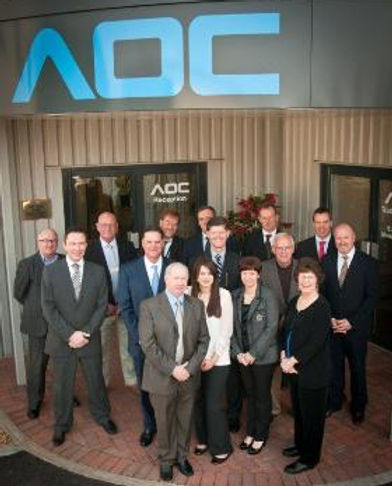
Boatbuilders rely on AOC to deliver Altek® resins and Hydropel® high performance marine resins and gel coats that demonstrate great processability in the shop and superior performance in the water. AOC low-styrene technologies range from 100% vinyl esters to general purpose polyesters. Use the excellent blister resistance of Hydropel® high performance marine chemistry for a skin coat. Or you can go for the ultimate upgrade by specifying a Hydropel® resin for the entire laminate. Whatever your laminate schedule, give your surface the excellent protection, color and gloss of a Hydropel® high performance marine gel.

AOC is a timeless company dedicated to manufacture the best in avery type of resin available in the market for your specific purpose... We have the best resins in the market or we are done...
Clear Resin

Clear Epoxy
AOC gel coat systems meet specific requirements for color, gloss, protection, durability, processability and low styrene content. Vibrin® and Hydropel® gel coats deliver the added values of superior quality and consistency, chemical expertise and control, and technical support dedicated to helping the customer succeed.
In the same fashion you might find every other type of resin like:
• Aoc Clear Resin
• Isotelic Resin
• #800 Marine Resin
• Gelcoat..
• And More...

New clear gel coat reduces yellowing
October, 2009 : Collierville, TN
New Vibrin® G415AA clear gel coat from North American resin leader AOC LLC is designed to dramatically reduce yellowing in cast polymer surfaces. “Laboratory tests show that Vibrin G415AA clear coat can reduce high temperature-induced yellowing by up to 50%,” said Dan Oakley, Gel Coat Product Leader for AOC.
Polyester Resins
Polyester resins are the most widely used resin systems, particularly in the marine industry. By far the majority of dinghies, yachts and workboats built in composites make use of this resin system.
Polyester resins such as these are of the 'unsaturated' type. Unsaturated polyester resin is a thermoset, capable of being cured from a liquid or solid state when subject to the right conditions. It is usual to refer to unsaturated polyester resins as 'polyester resins', or simply as 'polyesters'. There is a whole range of polyesters made from different acids, glycols and monomers, all having varying properties.
There are two principle types of polyester resin used as standard laminating systems in the composites industry. Orthophthalic polyester resin is the standard economic resin used by many people. Isophthalic polyester resin is now becoming the preferred material in industries such as marine where its superior water resistance is desirable.
Vinyl Ester, or Vinylester, is a resin produced by the esterification of an epoxy resin with an unsaturated monocarboxylic acid. The reaction product is then dissolved in a reactive solvent, such as styrene, to a 35 - 45 percent content by weight.
It can be used as an alternative to polyester and epoxy materials in matrix or composite materials, where its characteristics, strengths, and bulk cost intermediate between polyester and epoxy. Vinyl ester has lower resin viscosity (approx 200 cps) than polyester (approx 500cps) and epoxy (approx 900cps).
In homebuilt airplanes, the Glasair and Glastar kit planes made extensive use of vinylester-reinforced fiberglass structures. It is a common resin in the marine industry due to its increased corrosion resistance and ability to withstand water absorption. Vinyl ester resin is extensively used to manufacture FRP tanks and vessels.
Vinyl Ester


What is Gelcoat?
Gelcoat is a material used to provide a high-quality finish on the visible surface of a fibre-reinforced composite material. The most common gelcoats are based on epoxy or unsaturated polyester resin chemistry. Gelcoats are modified resins which are applied to moulds in the liquid state. They are cured to form crosslinked polymers and are subsequently backed with composite polymer matrices, often mixtures of polyester resin and fiberglass or epoxy resin with glass.
The manufactured component, when sufficiently cured and removed from the mold, presents the gelcoated surface. This is usually pigmented to provide a coloured, glossy surface which improves the aesthetic appearance of the article, such as a counter made with cultured marble.
Many marine craft and aircraft are manufactured using composite materials with an outer layer of gelcoat, typically 0.5 mm to 0.8 mm (0.02 in to 0.03 in) thick. Gelcoats are designed to be durable, providing resistance to ultraviolet degradation and hydrolysis.
Specialized gelcoats can be used to manufacture the moulds which in turn are used to manufacture components. These require very high levels of durability to overcome the mechanical and thermal stresses encountered during the curing and demoulding processes.
We can't tell you whether or not your boat requires cosmetic restoration or total refinishing, but by the end of this tutorial, you should be equipped with the knowledge to make that decision yourself. If, by the end of this tutorial, you still have questions, I urge you to re-read it. There are very few questions that will not be answered at some point.
What we can tell you is that the general appearance of your boat's present condition is not always an accurate barometer of the what it will take to make it like new again. Surveying the cosmetic condition of your boat has less to do with looks than it has to do with a chemically and mechanically solid foundation.

V.E. Paste (Vinyl Ester Paste)
V.E. Paste is a vinylester bonding paste with a quality much higher than historical commonly used products, generally based on filled polyester resins often fiberglass reinforced. C. U. Products bonding paste improves significantly the bonding properties in short and long term, and in most cases deletes the need to laminate over the bonding.
Productivity and reliability
Big producers are more and more moving to structural bonding to improve their productivity and reliability. V.E. Paste bonding paste has many advantages; it helps to avoid a further laminate over the bonding, improves application conditions as it is easier to apply and to smoothen, it increases a lot bonding properties, and improves mechanical and chemical properties in the long term. C.U. Products bonding paste provides to producers an additional security with reduced costs.
C.U. Products V.E. paste is perfectly adapted to composites plants work conditions. The application is similar to common practice and does not require specific skills.

Isophtalic Resin
The Isophtalic Resin have excellent resistance to blister. Is is sold as a 'matched performance system' for use with C.U.Products marine gelcoat for use in 'marine' and other similar industries.
In the Isphtalic Resin the polyester molecule is dissolved in the styrene. A peroxide compound, usually methyl ethyl ketone peroxide (MEKP) is used to catalyze the resin, which cross-links with some of the styrene, but not all of it. What styrene is not used in the chemical reaction flashes off, giving that fiberglassy smell, leaving microscopic holes in the laminate. It is through these holes that water passes during osmotic blistering.Vinylester resin also uses styrene as a monomer in about the same proportions. And it also uses peroxides like MEKP as a catalyst.
What is different though is that practically all of the styrene is used in the chemical reaction. Most of the styrene catalyzes with the vinylester, and the remainder crosslinks with itself, which makes polystyrene molecules within the resin. This closes off the vast majority of the microscopic holes in the resin, and this is why vinylester is so impervious to osmotic blistering. This is why chemical storage tanks, such as underground gasoline tanks, are always made with vinylester resin.I'm a paragraph. Click here to add your own text and edit me. I’m a great place for you to tell a story and let your users know a little more about you.
Aropol Resin
C,U. Products Aropol unsaturated polyester resins can be utilized in a wide range of manufacturing processes such as open mold laminating, bulk molding compounding, sheet molding compounding, resin transfer molding, pultrusion and infusion.
Aropol resin technology provides high mechanical and impact properties and good surface profiling. Aropol resins can be customized to meet fabricators needs for varying reactivity, viscosity, gel time and exotherms.